Choose a test user to login and take a site tour.
To continue using the site you need to read the revised version and agree to the policies
Search in Photos
Search in Albums
Search in Members
Search in Articles
Search in Blogs
Search in Businesses
Search in Events
Search in Groups
Search in Listings
Search in Music Albums
Search in Music Songs
Search in Pages
Search in Questions
Search in Quotes
Search in Recepies
Search in Thoughts
Search in Videos
Search in Channels
Search in Wishes
Search in Prayers
Search in Discussions
Search in Products
Search in Jobs
Search in Products
Search in Photos
Search in Albums
Search in Members
Search in Articles
Search in Blogs
Search in Businesses
Search in Events
Search in Groups
Search in Listings
Search in Music Albums
Search in Music Songs
Search in Pages
Search in Questions
Search in Quotes
Search in Recepies
Search in Thoughts
Search in Videos
Search in Channels
Search in Wishes
Search in Prayers
Search in Discussions
Search in Products
Search in Jobs
Search in Products
13 minutes, 30 seconds
-13 Views 0 Comments 0 Likes 0 Reviews
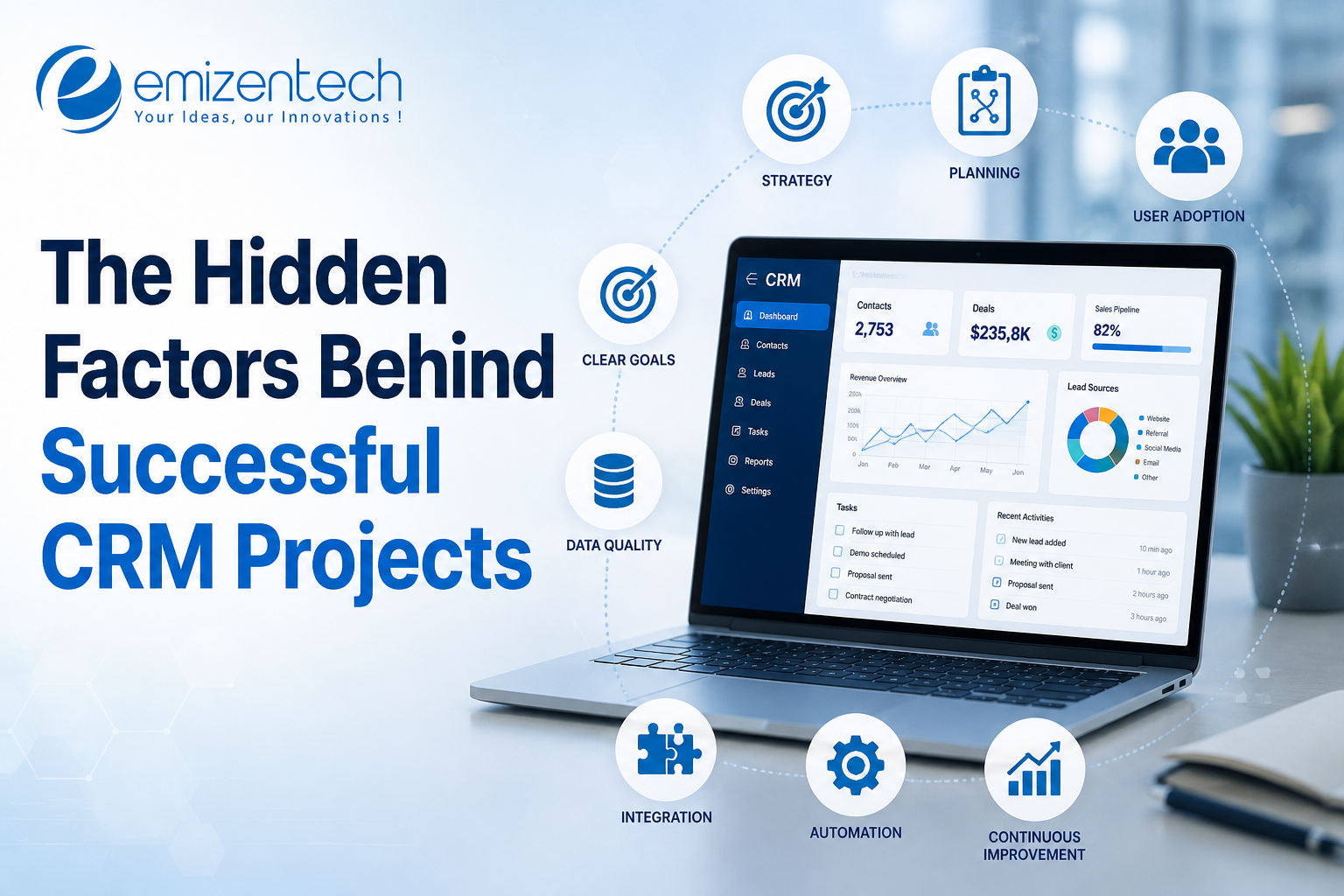
Ask ten companies why their CRM rollout stalled and you'll get ten different answers. The software was clunky. The data was a disaster. Sales never logged in. But the software is rarely the real problem. CRM project success usually comes down to things you won't see in a vendor demo: who owns the project, how clean the data is, and whether anyone asked the people using it what they actually need. Those are the quieter factors, and they decide how things go long before launch day.
Depending on who you ask, a big share of CRM projects miss their goals. Not always dramatically. More often it's a slow fade. Half the team stops logging in, the reports stop being trusted, and the system becomes something people open only because they've been told to.
That pattern tells you something. A CRM implementation isn't a software install. It changes how people work, and changes like that usually fail for human reasons, not technical ones. If you hand the whole thing to IT and call it done, you've already made the first mistake.
This one is boring, which is probably why it gets skipped. Every project I'd call a success had one person who owned it. Not a committee, not "the sales ops team." One person, with enough authority to make calls and say no to scope creep.
Good CRM project management also needs an executive sponsor who shows up. In practice, that looks like this:
Without that, the project loses every priority fight to whatever's on fire that week.
A lot of companies pick the tool first and figure out requirements later. It's backwards, and it gets expensive. Before you look at any platform, write down what you're trying to fix. Slow lead response? No view of the pipeline? Support tickets and sales notes living in different worlds?
Be specific. "Cut lead response time from a day to an hour" is something you can test. "Improve customer relationships" is a wish.
Decide early who the users are, too. Sales, support, marketing, finance all want different things, and trying to please every group equally usually pleases none of them. A written list also keeps vendor calls honest. If you need somewhere to start, this CRM requirements checklist helps you separate real needs from nice-to-haves before any money is spent.
More than almost anything else, and people underestimate it every single time. A CRM is only as good as what's in it. Duplicate contacts, old job titles, company records half filled in. Move all that into a shiny new system and you've just relocated the mess.
Try a quick test: ask three reps to find the same customer. If they come back with three different records, you've got work to do. A proper cleanup before migration usually covers:
Tedious? Yes. It's also the difference between a CRM people trust and one they quietly ignore.
You can build a technically perfect system and still fail if the reps hate it. This is where most CRM implementation efforts quietly die, and the reason is usually simple. The CRM feels like extra work with nothing in it for the person typing.
So give them something. Involve a few frontline users early, ask what slows them down, and build around that. Cut required fields to what you truly need. If a rep spends fifteen minutes logging one call, they'll stop logging calls. Simple as that.
Training matters, but not one two-hour session that everyone forgets by Friday. Short sessions, quick guides and someone to ask when they're stuck work far better. And watch the managers. If they run pipeline reviews from spreadsheets, the team notices and follows.
Not every project needs custom work. Plenty of businesses run fine on a well-configured off-the-shelf platform. But CRM development becomes necessary when your processes don't fit standard objects, when you need to connect legacy systems, or when compliance rules limit how data can move.
Stretching the admin panel past its limits usually creates fragile workarounds. At that point, it's better to hire CRM developer expertise for the custom modules, integrations, and automation logic, so they get built properly instead of patched together. Bring them in early, though. Developers who join after the process design is finished tend to inherit decisions that should have been questioned.
Whoever you pick, ask how they handle documentation and handover. A system only one person understands is a risk, not an asset.
There's no secret formula here, just a few habits that smoother projects tend to share. Most are about discipline, not technology. They cost almost nothing to follow and a lot to ignore, so get them in place before the build starts.
Go-live isn't the finish line, though plenty of companies treat it like one. You judge success afterwards, against the goals you set at the start. Pick a few metrics tied to those goals:
Don't track twenty things. Five is plenty, and people might actually look at them. Grab a baseline from before the project too, otherwise you can't prove anything improved. And listen to feedback. If reps say the system saves them time, that's worth more than a dashboard full of green numbers.
When a CRM project struggles, the cause is rarely a surprise in hindsight. The same few problems keep turning up, and most were visible months earlier if anyone had been looking. Here's a short list to check your own project against.
Catch two or three of these early and you can usually correct course. Catch them after launch and you're paying for a rework.
CRM project success rarely depends on picking the "best" platform. It depends on clear goals, a real owner, clean data, and people who actually want to use the thing. Get those right and most technical problems are fixable. Get them wrong and no feature list will rescue you. If you'd like experienced help planning or building your CRM, Emizentech can work alongside your team from requirements through to rollout and support.
It means the system gets used, the data can be trusted, and the business hits the goals it set at the start, like faster lead response or better forecasting. Going live on its own doesn't count.
Poor user adoption, mostly. It usually traces back to unclear goals, messy data, and a system that feels like extra work for the people entering information.
It depends on scope. A simple setup can take a few weeks, while custom builds with data migration and integrations often run several months. Rushed data cleanup is the usual reason timelines slip.
Someone has to own scope, timelines and decisions. Without that, requests pile up, deadlines slip, and the project drifts away from what it was meant to do.
When standard configuration can't handle your processes, integrations or compliance needs. If workarounds keep multiplying, custom development usually works out cheaper in the long run.